
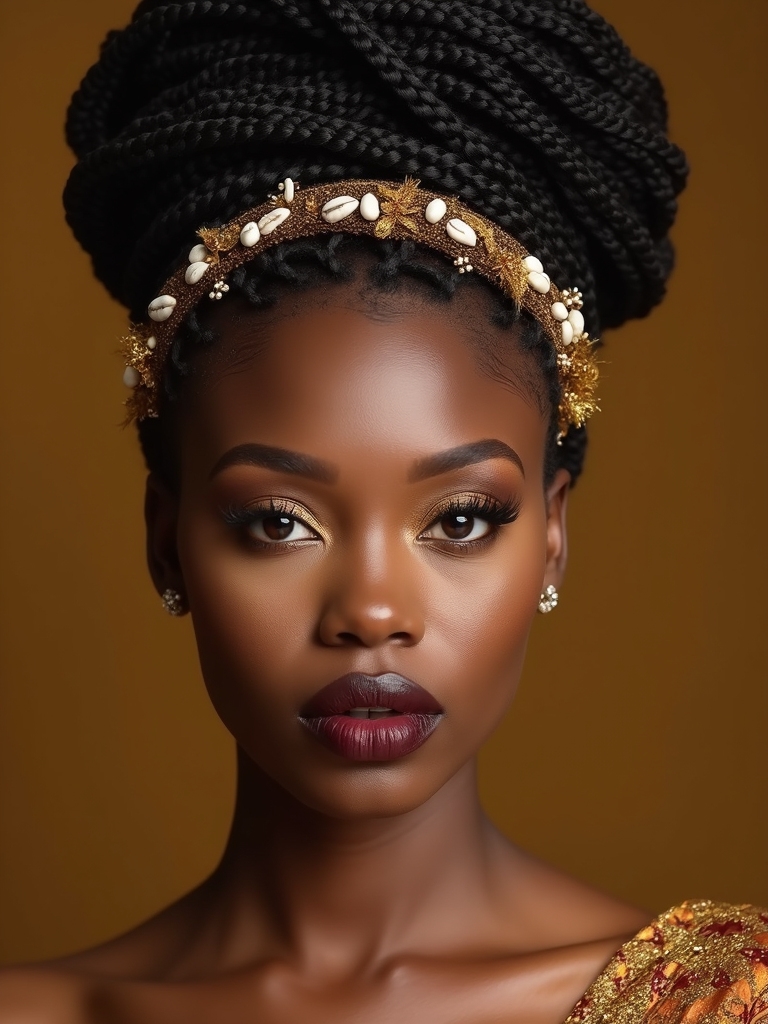
I’m here to help you crown your day with braided crowns, sculptural cornrows, Fulani arcs and beaded accents that map family stories onto hair. I imagine loops edged with gold thread, cowrie charms for blessing, and geometric Yoruba lines that speak of place.
Twists and rope braids add rhythm, while wrapped headpieces fold in cloth and vow. These looks honor ancestors and celebrate new beginnings—keep going and you’ll discover detailed designs, meanings, and styling ideas.
Braided Crown Styles That Celebrate Royal Lineage
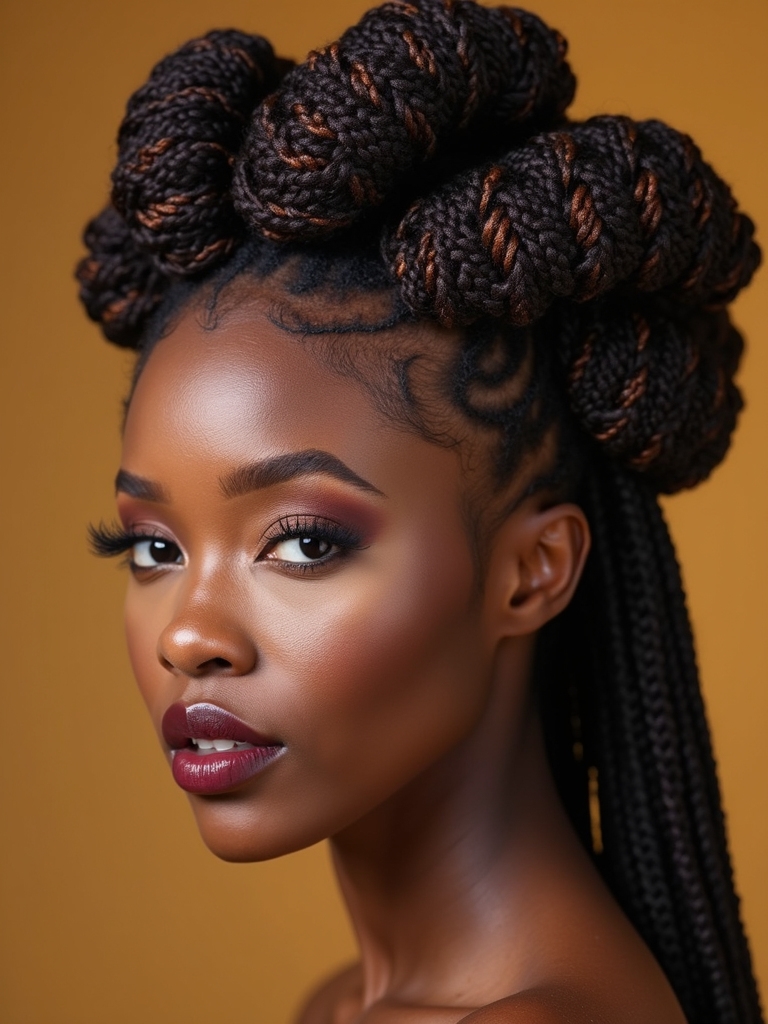
When I braid a crown, I’m stitching together more than hair — I’m tracing the lines of ancestors who wore plaited halos as symbols of power, protection, and belonging.
I shape loops and braids like braided rivers, place shells and gold threads where crowns once gleamed, and speak to brides of lineage and promise, honoring names, maps, and stories folded into each woven curve.
The intricate designs of elegant African bridal hairstyles reflect not only beauty but also deep cultural significance that connects brides to their heritage.
Sculptural Cornrows With Cultural Motifs
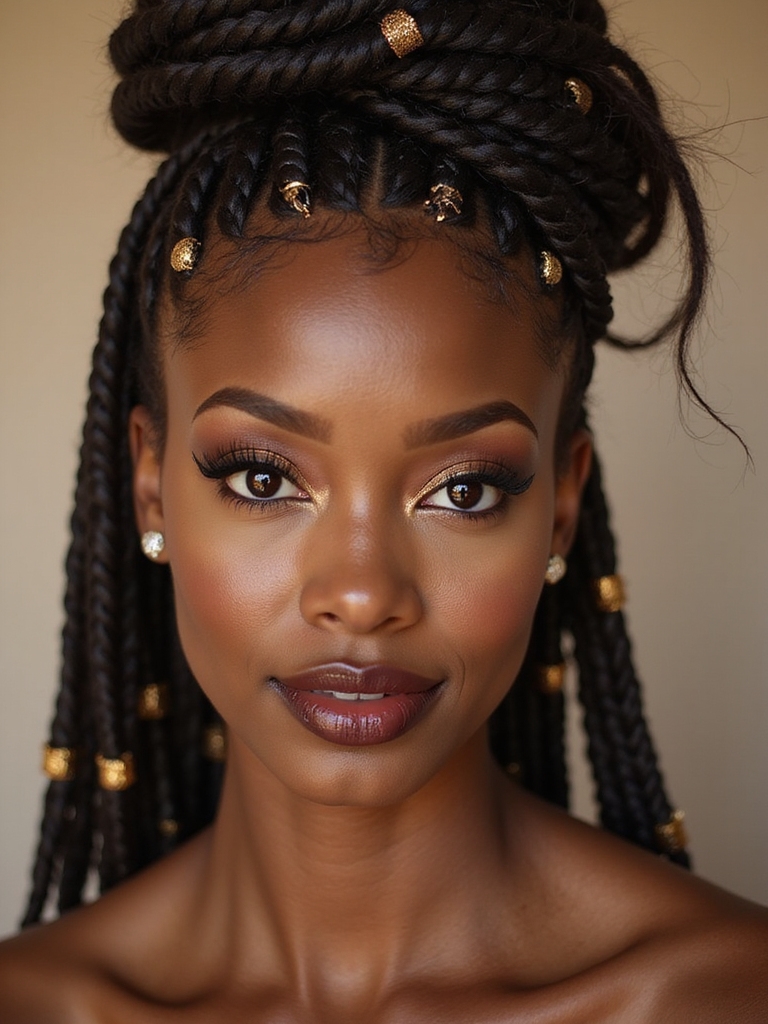
I’ll show you how sculptural cornrows become living maps, where symbolic patterns—spirals, chevrons, and interlocking lines—carry stories of lineage and ritual.
I’ll explain the techniques that give them lasting structure, from precise parting and tension control to braiding anchors and hidden padding.
Together we’ll honor the motifs and the craftsmanship that lift hair into architectural beauty.
Symbolic Pattern Choices
As I trace the sweep of sculptural cornrows, I feel each curved line speak like a story — geometric suns, braided rivers, and ancestral symbols woven close to the scalp.
I choose patterns that honor lineage, signal hope, and whisper prayers:
- Sun motifs for warmth
- River braids for journey
- Chevron for protection
- Spiral for rebirth
- Dot clusters for ancestors
Incorporating timeless bridal hairstyles can also enhance the beauty of these cultural expressions.
Techniques For Structure
Carving those symbolic lines into hair asks for hands that know both poetry and geometry, so I begin by mapping the head like a living canvas — marking arcs, anchors, and flow with a comb and fingertip.
I braid with tension tuned to sculpture, sculpting cornrows into raised relief, weaving motifs that echo ancestors. Each stitch-like turn honors lineage, balancing durability with delicate ornamentation.
Beaded Accents and Heritage Adornments
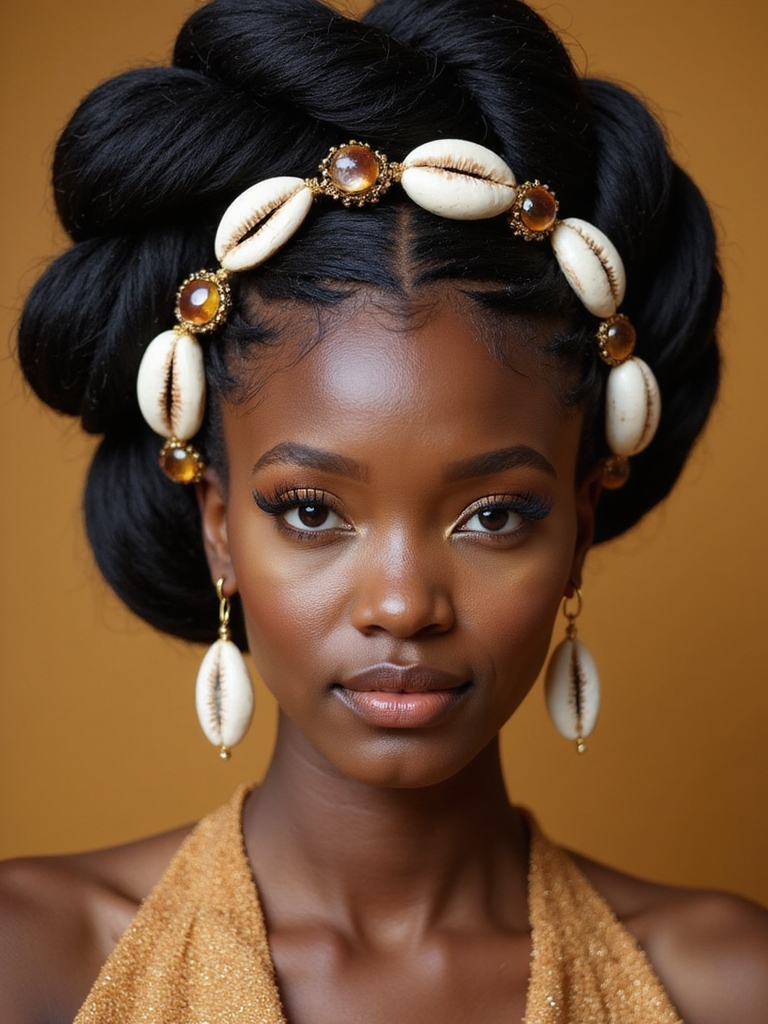
When I tuck tiny glass beads into a braided crown, I’m threading history and home into every loop; each color and pattern speaks of lineage, celebration, and a woman’s place in a story that began long before her.
I weave memory and meaning, whispering ancestral songs through each gleam.
- Cowrie charm for fertility
- Brass rings for strength
- Seed beads for seasons
- Coral for protection
- Silk ribbons for union
Elegant Loc-Updos for Timeless Elegance
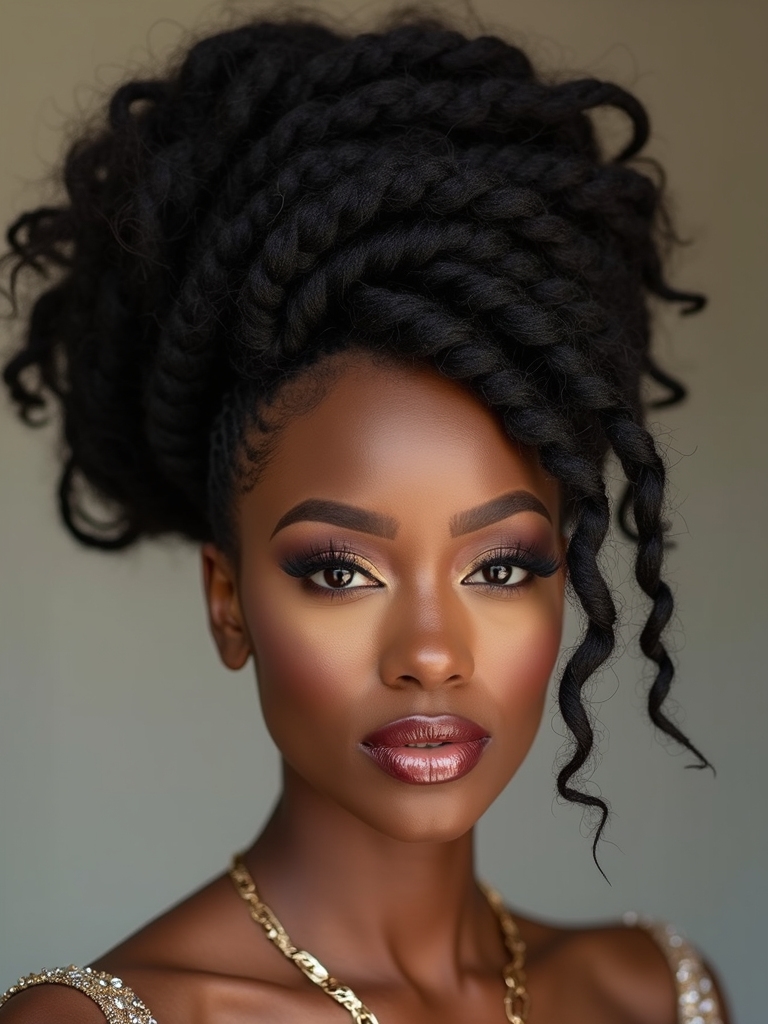
Though the coils rise and gather at my crown like a curated constellation, I treat each loc as a sentence in a lived language—pinning, twisting, and lifting to tell a story of poise and heritage.
I shape updos that balance structure and softness, tuck gold cuffs and soft veils, and let ancestral rhythm guide every turn, honoring lineage while radiating timeless bridal grace.
Embracing natural hairstyles allows brides to celebrate their unique beauty and cultural heritage on their special day.
Traditional Fulani Braids Reimagined for Weddings
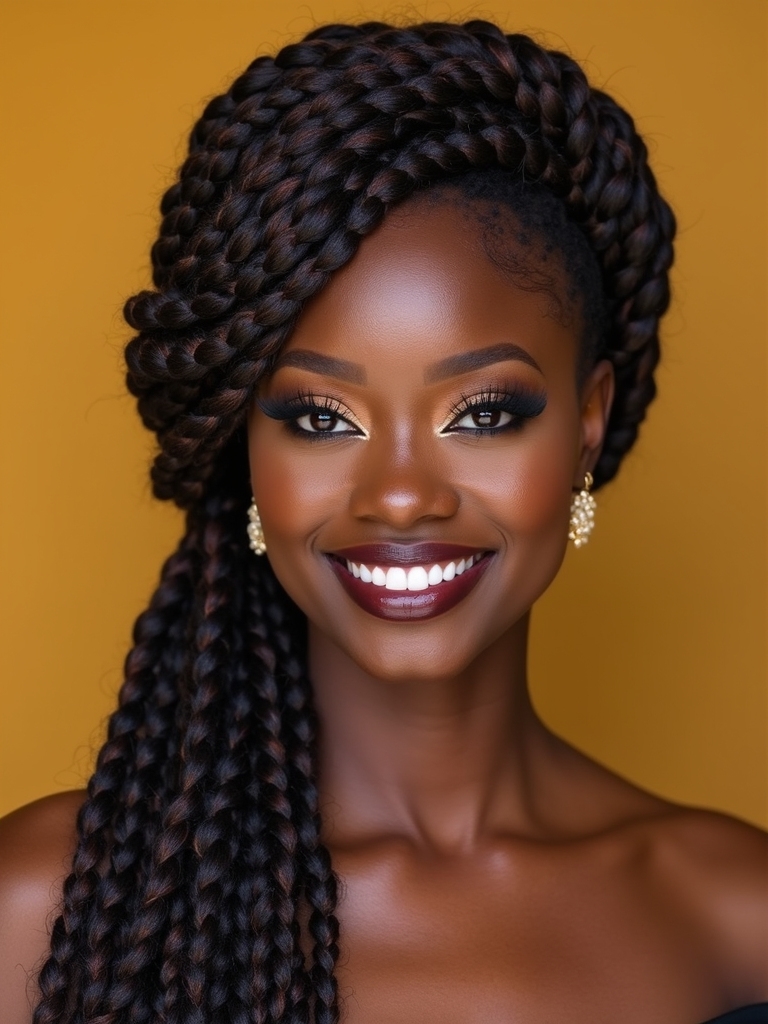
I love how the signature curved cornrows of Fulani braids trace a graceful map across the scalp, like river bends catching the light.
For weddings, I imagine them woven with beads, gold threads, and cowrie accents that honor lineage and carry quiet symbolism.
These unique adornments celebrate locs bridal hairstyles that transform a traditional style into a bride’s statement of heritage and beauty.
Signature Curved Cornrows
A braid feels like a declaration, and I shape each curved cornrow to honor the Fulani line — arcing paths that trace the bride’s face and history with deliberate grace.
I weave stories into each curve, listening to breath and rhythm.
- Gentle arches framing cheekbones
- Clean, rhythmic partings
- Skin-tight, graceful tension
- Subtle asymmetry for movement
- Timeless, modern silhouette
Incorporating elements of bridal hairstyles for Black women not only enhances the beauty but also celebrates cultural significance.
Adornments and Symbolism
From those curved cornrows that trace the cheekbones, I reach for the small, resonant pieces that finish a bride’s story: brass rings that catch candlelight, cowrie shells that speak of lineage, and threaded beads that mark rites and wishes.
I fasten each ornament with care, knowing every shimmer holds a blessing, every placement recalls ancestral maps, and every braided loop binds present joy to inherited grace.
Each adornment reflects the bride’s natural beauty and serves as a testament to her rich heritage.
Intricate Ghanaian Fulani and Knotless Variations
When I trace the braided arcs of a Ghanaian Fulani crown, I’m transported by the rhythm of fingers weaving history into hair; each curve and beaded tassel speaks of lineage, celebration, and the quiet authority of place.
- Fulani crescent braids, proud and precise
- Beaded edges that click like prayer
- Knotless flows for softer modern vows
- Gold cuffs echo ancestral sun
- Hair as covenant, art and identity combined
The artistry of these styles is a testament to African Bridal Hairstyles that honor deep cultural roots and celebrate the beauty of tradition.
Yoruba-Inspired Geometric Braiding Patterns
Stepping away from the crescent arcs and beaded whispers of Fulani crowns, I invite you to look at how Yoruba geometry sings across the scalp—sharp angles and measured symmetry that map stories like constellations.
I trace lines that honor agbada motifs, interlocking triangles echoing town patterns, each braid a ritual compass.
Together we celebrate ancestral mathematics, elegance rendered in scalp and strand, precise and sacred.
Afro Puff and Natural Texture Bridal Looks
As I lift each coil and coax its shape, I honor the living map of our hair—its springs and spirals becoming a bridal halo that catches sunlight like polished bronze.
I shape afro puffs and embrace natural texture with quiet reverence, celebrating lineage and resilience.
- Crowned puff with beaded accents
- Soft halo of defined coils
- Playful double puffs
- Tapered sides, voluminous top
- Embroidered scarf accents
Twisted Chignons With Ancestral Symbolism
Moving from the playful puffs and haloed coils, I gather strands into a spiral that feels like holding a story in my palms.
I twist each chignon with intention, tracing patterns passed down through elders. The coiled bun becomes a sigil of lineage, glossy and deliberate, resting at nape or crown.
You feel history tucked into hair, a silent blessing in every turn.
Maasai-Inspired Beadwork Integrated Into Hair
I’ll guide you through how Maasai beadwork—each color like a line of ancestral poetry—carries meaning for love, strength, and community.
I’ll show practical ways to place strands and collars into braids and buns so the beads sit like constellations on the scalp.
Then I’ll map how contemporary brides are adapting those patterns and palettes into subtle, modern statements that honor tradition while feeling fresh.
Traditional Bead Color Meanings
Color speaks before words do, and when I thread Maasai-inspired beads into a bride’s hair I’m weaving meaning as much as beauty.
I explain each hue softly, letting history hum through color:
- Red: courage, life’s pulse.
- Blue: sky, nourishment.
- Green: land, growth.
- White: purity, clarity.
- Black: strength, ancestral power.
Beadwork Placement Techniques
One careful row can change everything: when I tuck Maasai-inspired beads into a bride’s braids, I think of rhythm and balance, of how placement sings with the face and the walk.
I nest beads along partings and crown lines, accentuating cheekbones and movement. Each cluster echoes clan patterns, anchoring tradition while letting light catch color as she turns toward vows.
Modern Bridal Bead Adaptations
When I adapt Maasai-inspired beadwork for a modern bride, I listen to the rhythm of her hairstyle and the cadence of her movement, letting small glass discs and vibrant strands trace the lines of her face.
I weave history into curls, honoring elders while shaping fresh silhouettes.
- Color as lineage
- Bead weight balance
- Movement-friendly placements
- Contrast with texture
- Personal symbolism
Fulani Rings and Metal Accents for Bridal Hair
Though rooted in centuries of Sahelian tradition, Fulani rings and metal accents feel perfectly at home in a modern bridal crown, and I love how they transform simple braids into luminous stories.
I place gleaming rings along partings, tiny coils catching candlelight, and watch the bride become a moving constellation.
Each metal whisper honors ancestry while framing her face with noble, radiant geometry.
Senegalese Twists and Rope Braided Designs
If you trace the rhythm of a bride’s walk, you’ll see how Senegalese twists and rope braids catch that motion — each corded strand spun tight like a river’s braid, sleek and luminous against the skin.
I honor this craft, feeling ancestral hands in each twist.
- Sculpted elegance
- Long-lasting sheen
- Lightweight drama
- Embellishment-ready
- Cultural continuity
Statement Headwraps and Wrapped Bridal Styles
I want to walk you through how statement headwraps carry stories — from clan marks and rites of passage to modern declarations of style — as much as they crown a bride.
I’ll show how different fabrics and textures, from glossy satin to handwoven kente, change the mood and meaning of a wrap.
Then we’ll explore draping techniques and variations that sculpt the silhouette, balance veils, and transform tradition into a personal vow.
Cultural Symbolism and Meaning
When I stand before a wrapped bridal style or a statement headwrap, I feel the way cloth can speak—bold pleats and layered folds declaring lineage, faith, and a family’s hopes without a single word.
I trace meanings in every knot and silhouette, knowing each style carries stories:
- ancestral honor
- marital blessing
- social identity
- spiritual protection
- communal celebration
Fabric Choices and Textures
One fabric can change a bride’s whole bearing: I reach out and feel the weight of satin that hums with quiet formality, the crispness of aso-oke that holds sculpted pleats, and the coarse, earthy weave of kente that seems to drum ancestral rhythms through my fingertips.
I choose textures that speak—velvet for velvet nights, lace for soft whispers, brocade for ceremonial pride.
Draping Techniques and Variations
Having felt how fabric speaks through weight and weave, I let those textures guide the shapes I wrap around a bride’s crown.
I sculpt folds that honor lineages, balance height and soft shadow, and whisper stories in every tuck.
- Bold turban peak for ceremony
- Low chignon wrap for reception
- Layered pleats echoing patterns
- Knotted front statement
- Veil-tucked elegance
Heritage-Inspired Accessory Pairings and Veils
How do we honor our ancestors while styling the modern bride?
I choose combs carved like elders’ symbols, brass cuffs echoing sunrise drums, and veils woven with indigo threads that whisper lineage.
I drape beads and cloth to frame the face, letting each ornament tell a story of home, resilience, and blessing as she steps into new chapters with ancestral grace.
Modern Interpretations of Tribal Hair Artistry
While I honor the marks and methods of our mothers and grandmothers, I also reshape them for brides who move between continents and calendars, braiding ancestral geometry into sleek updos, thread-wrapping sacred patterns around low buns, and translating ritual scar-line rhythms into modern plaits.
- Gold-thread accents echo riverlight
- Minimalist cornrows map ancestry
- Sculpted coils meet city silhouettes
- Beaded ends whisper vows
- Soft fades honor linework
I thought I’d surrender my heart to veils and pearls, but my soul keeps stealing crowns—braids that trace ancestral maps, cornrows that sketch warrior constellations, beads that drum like rain on tin roofs.
I fold locs into quiet altars, wrap silk into ancestral hugs, and let Fulani spirals whisper vows.
Ironically, this modern altar is as old as our mothers’ fingers; in every twist and tuck, I wear home, loud and luminous.